

Search expert Saul Westbrook of Peripheral found something odd on Google: millions of Facebook pages, written by AI, ranking for everyday searches. This is his research, and it is one of the clearest recent examples of what Google calls scaled content abuse.
What Facebook Answers is
The pages sit under facebook.com/fb-answers/. Each one is a short AI summary of a topic, labelled “Summarized by Meta AI”. Under the summary are the real Facebook posts it was built from, and a line such as “53 people talking about this”.
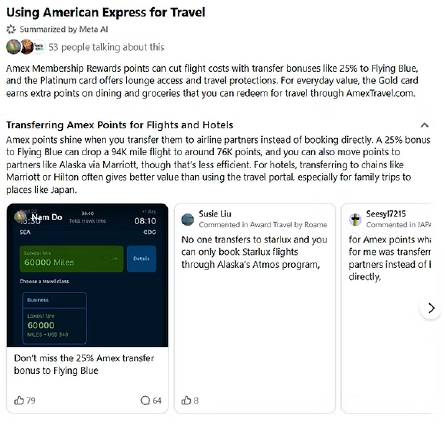
Source: Peripheral, screenshot of a Facebook Answers page.
Westbrook noticed them in June 2026. They came soon after Meta launched its own AI Mode, and he believes they are saved versions of what that AI Mode produces, set up to rank in search. Each page ends with a “More like this” list and a “Good result / Bad result” button. His guess is that Facebook is using them to collect feedback on its AI answers.
The numbers
All of these are Semrush estimates, as reported by Westbrook.
- Over 39 million of these pages rank on Google for at least one keyword in the US.
- Since going live, they have brought in over 100 million visits worldwide.
- Between July and August, the number of keywords with a Facebook Answers page ranking jumped from 4 million to 53 million worldwide.
Estimated monthly visits from Google, worldwide:
| Month (2026) | Visits |
|---|---|
| May | 129,514 |
| June | 114,728 |
| July | 1,032,527 |
| August | 12,167,857 |
| September | 36,388,769 |
| October | 40,590,906 |
In October, about 21.1 million of those visits came from the US and 2.9 million from the UK.
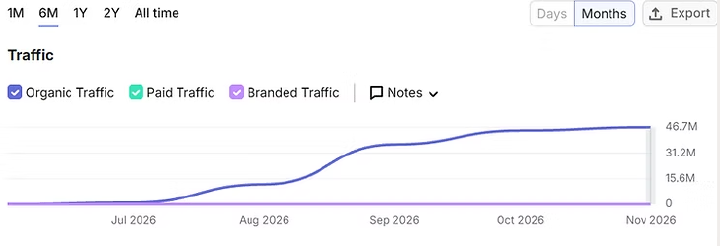
Source: Peripheral, Semrush chart of monthly worldwide organic traffic to facebook.com/fb-answers/.
Some pages rank high for big searches. Westbrook lists “LAS Airport location” at position 1 (about 17,800 visits), an Amex travel search at position 2 (about 23,900) and “Labcorp” at position 6 (about 16,400).
Where it looks like abuse
Google defines scaled content abuse as many pages generated for the primary purpose of manipulating search rankings. It defines doorway abuse as pages created to rank for specific, similar searches.
Westbrook points out how closely Facebook Answers fits. It created a huge number of pages in a short time, and many are very similar. He found over 180 English pages on padel tennis alone, with near-identical titles.
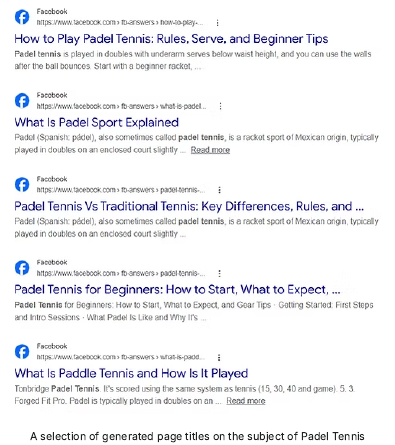
Source: Peripheral, a selection of Facebook Answers page titles on padel tennis in Google results.
There is also a quality problem. He found pages on cryptocurrency, medical advice and gambling built from individual people’s posts, not from experts. One weather page told him London’s temperature the next day would be 34 to 35 degrees, in November.
Why Facebook may get away with it
Westbrook thinks Google may treat the pages as genuine value, because all the content comes from Facebook’s own users. The pages also survived Google’s September spam update. He notes this is a possible reading, and Google has not commented. Facebook has not spoken publicly about the pages either.
What it means for your site
Facebook has huge authority and its own supply of real posts. A normal site that generates thousands of similar AI pages has neither. If Google judges your pages to be scaled content abuse, the penalty can hit more than those pages.
So I would not treat this as a tactic. Westbrook’s own advice is not to build a strategy on these pages, because they are new and may not keep ranking.
What to do
- Do not mass-produce pages. One strong page beats 50 near-copies.
- Post on Facebook as a brand. Westbrook says these pages draw on real posts, so a strong Facebook presence could get your brand into them.
- Check what they say about you. Search
site:facebook.com/fb-answers "your brand"on Google to find pages that mention you. - Watch for changes. If Google acts on these pages, it will show how it enforces the policy.