

ChatGPT advertising is new, changing quickly and thinly documented. We could not open OpenAI’s pages directly, so this article relies on trade press and marketing guides, and says so where it matters. Check OpenAI’s own announcements before you commit budget.
What reports say
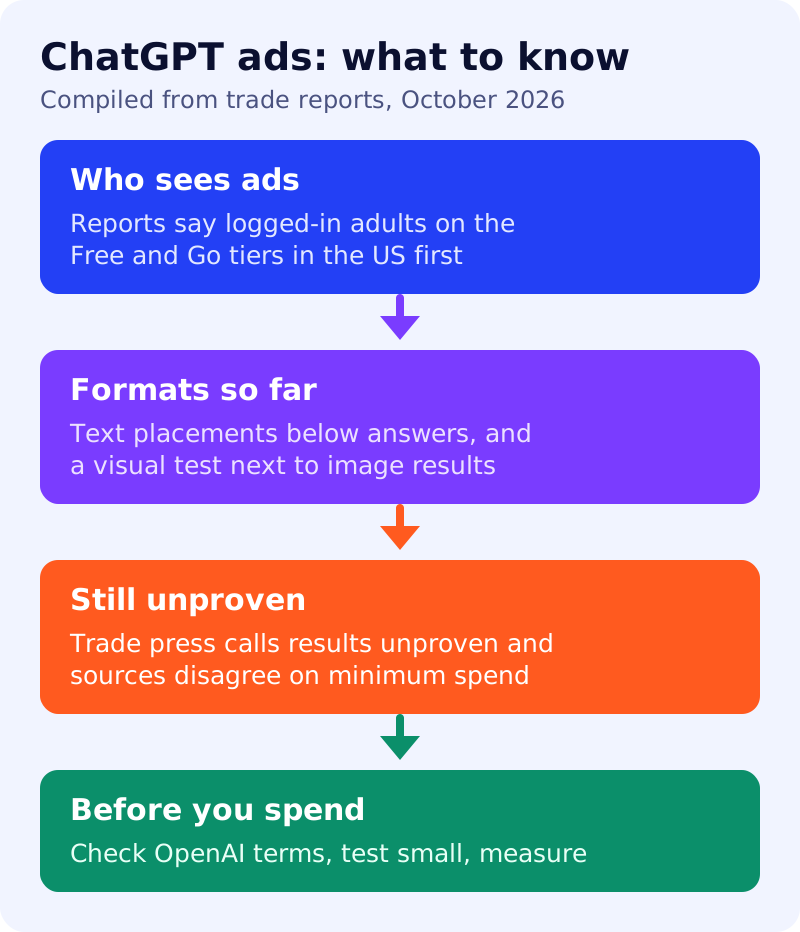
- Who sees ads: one guide reports that OpenAI began showing ads to logged-in adults on the Free and Go tiers in the US from February 2026, and that paid tiers stay ad-free. It also says ads do not change ChatGPT’s answers.
- Buying: the same guide says a self-serve Ads Manager opened to US businesses in May 2026. Other guides describe buying on impressions or clicks, and say OpenAI added ways to buy; see OpenAI’s post “New ways to buy ChatGPT ads”.
- Formats: text placements in labelled boxes below answers are the main format reported. TechCrunch reported on October 5 that OpenAI launched visual ads alongside image-generation results, starting in the US with a test group of advertisers. Digiday reported a “click to chat” format, where an ad opens a conversation with a brand’s AI agent, in a small pilot.
Where sources disagree or are unclear
- Minimum spend: one source says a $50,000 minimum was removed in May; another describes $200,000 minimum commitments. We cannot reconcile them.
- Other countries: some guides report launches in the UK and Europe. We could not confirm them from a primary source.
- Results: Digiday’s coverage describes ChatGPT ads as promising but unproven.
For context, see our earlier reports on ChatGPT introducing ads and ads coming to AI answers.
What to do
- Read OpenAI’s current ads terms and eligibility before planning.
- Start with a small, fixed test budget and a clear goal such as qualified clicks.
- Prepare a landing page that answers the question the ad appears next to.
- Install measurement and compare against other channels.
- Keep organic work going: allow OAI-SearchBot so your pages can appear in answers without paying. See how to get found in ChatGPT.
Sources: the trade reports and OpenAI post linked above.